

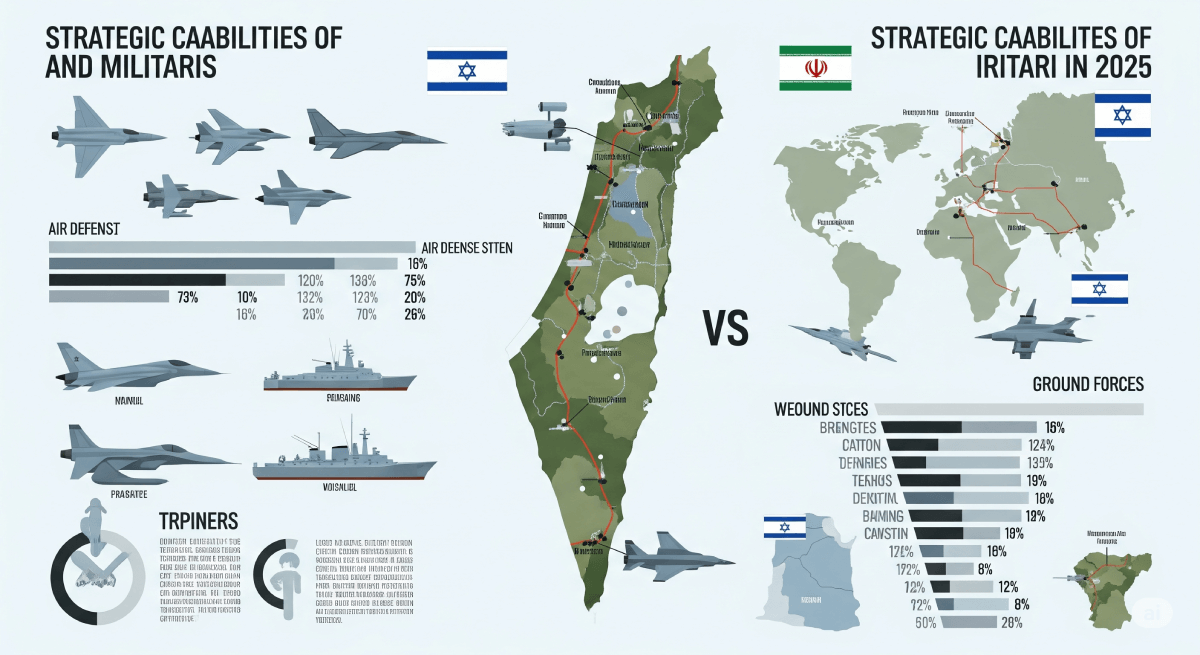
In 2025, tensions have escalated into a proxy conflict between **Israel vs Iran military comparison**—with both nations ramping up capabilities and engaging in proxy warfare. This deep dive explores troop numbers, air power, missile arsenals, naval strength, cyber & special forces, nuclear assets, and strategic postures of each country, revealing who holds the upper hand.
1. Active Personnel & Conscription
Iran outpaces Israel by numbers:
- Iran: ~610,000 active troops, 350,000 reservists; Basij militia adds millions.
- Israel: ~170,000 active troops, 465,000 reservists, compulsory service with high readiness.
– Iran’s manpower is formidable, but Israel’s reserve and training systems provide better readiness and mobilization speed.
2. Military Spending & Budget
- Israel: ~$24 billion (7.3% of GDP), second-highest military burden globally.
- Iran: ~$10 billion (2.5% of GDP), ranking 11th in the region’s military spending.
– Israel’s higher per-GDP spending enables advanced capability and U.S.-backed equipment support.
3. Armored & Ground Forces
- Tanks: Iran ~2,198 tanks vs Israel’s ~1,300.
- Armored vehicles: Israel ~6,190 AFVs; Iran ~2,875.
– Iran maintains sheer volume, while Israel fields fewer but modernized tanks and mechanized units.
4. Air Force & Helicopters
- Combat aircraft: Israel’s ~420 vs Iran’s ~407 (plus IRGC’s 23).
- Helicopters: Israel ~80 attack helis; Iran ~50 plus IRGC units.
However, Iran’s fleet is aging; Israel maintains F‑35s, drones, and modern ECM systems.
5. Naval Strength
- Submarines & frigates: Iran ~17 subs, dozens patrol vessels; Israel ~5 subs, fewer patrol ships.
– Iran’s naval numbers are greater, but Israel’s submarines and advanced missile systems offer higher strategic impact.
6. Ballistic & Cruise Missile Arsenal
Missiles are a key indicator:
- Israel: Jericho III MRBMs, LORA SRBMs, top-tier missile defense (Arrow, Iron Dome).
- Iran: Diverse arsenal: Shahab, Sejjil, Ghadr, Qassem Bassir—up to 2,000 km range.
– Israel’s defense systems intercept most threats, while Iran’s missile strike capacity remains a deterrent.
7. Nuclear Capability & Infrastructure
- Israel: Believed to hold ~90 nuclear warheads; undeclared under ambiguity.
- Iran: Lacks weapons but continues uranium enrichment; key sites like Fordow & Natanz remain targets.
– Israel holds overt nuclear dominance; Iran remains a nuclear fallback challenge.
8. Cyber & Special Ops
- Israel: Mossad’s hybrid warfare—insider drone sabotage + IDF airstrikes on missile sites.
- Iran: IRGC’s cyberforce, proxy mobilization via Hezbollah, Houthi groups.
– Israel’s integrated approach combines cyber, covert, and aerial tactics; Iran relies on asymmetric and proxy warfare.
9. Recent Escalations & Capabilities in Action
- June 13–15 strikes: Israel attacked nuclear sites, missile infrastructure; Iran launched ~150 missiles & 100 drones.
- High interception rates (~80–90%) show Israel’s air defense edge; Iran’s retaliatory capability remains impactful.
10. Strategic Postures & Alliances
- Israel: Near-peer U.S. ally; advanced defense tech ecosystem; ready for pre-emptive strikes.
- Iran: Part of Russia-Chinese axis; strong proxy network; missile buildup; nuclear fallback risk.
What This Means Regionally
- Israeli advantage: Precision, deterrence, U.S. backing—able to degrade Iran’s nuclear progress.
- Iranian resilience: Numbers, missile reach, proxies, and nuclear infrastructure deter escalation.
- Proxy escalation: Iran’s allies (Hezbollah/Houthi) hold leverage; risk of wider conflict grows.
- Global impact: Oil prices, shipping lanes, regional coalitions all hang in the balance.
Internal Resources
- Global Politics & Israel-Iran Dynamics
- Global Power Insights & Tech Security
- Explore More in Politics
High‑Authority External Links
- AP News: How the militaries of Israel and Iran compare – ( https://apnews.com/article/iran-israel-militaries-mideast-us-613e71aff67f6e1701981583bf699bc6 )
- FT: Inside Iran’s impenetrable nuclear bunker – ( https://www.ft.com/content/e8fea309-7965-4b10-a46d-270aac9542d8 )
- Reuters: Air superiority and underground bunkers – ( https://www.reuters.com/world/middle-east/israel-air-might-tehran-nuclear-bunkers-likely-prolong-conflict-2025-06-13/ )
Conclusion
The **Israel vs Iran military comparison** reveals a stark asymmetry: Israel’s strategic advantage lies in technology, defense systems, and U.S. backing. Meanwhile, Iran’s strength is its greater manpower, missile range, and proxy influence. Yet, recent attacks show Israel can deliver precise preemptive strikes, while Iran retains the ability to retaliate regionally.
What unfolds next depends on deterrence efficacy, diplomatic pressure, and proxy escalation. For now, Israel holds technological supremacy—but Iran remains dangerous and resilient, ensuring this strategic rivalry remains one of the most consequential global flashpoints in 2025.
Tags: Israel vs Iran military comparison, military capabilities, Israel defense, Iran military, Middle East conflict